Burning Fat: Where Does It Go?
Consequently, leptin and insulin, on their own, do not appear to maintain the signal of energy depletion as weight is being restored. The biological control of body weight involves a complex responses loop between the brain and periphery. This comments system adjusts when energy consumption is cognitively (in humans) or forcefully (in pet designs) restricted.- The reaction to these integrated signals is that appetite rises and the expense of power declines.The experiments were not randomized, and the detectives were not blinded to allowance throughout experiments and outcome evaluation.Women, babies, children, and vegetarians are at higher risk.When we eliminate a fat pocket, we change the dynamics of just how and where you initially put on weight.
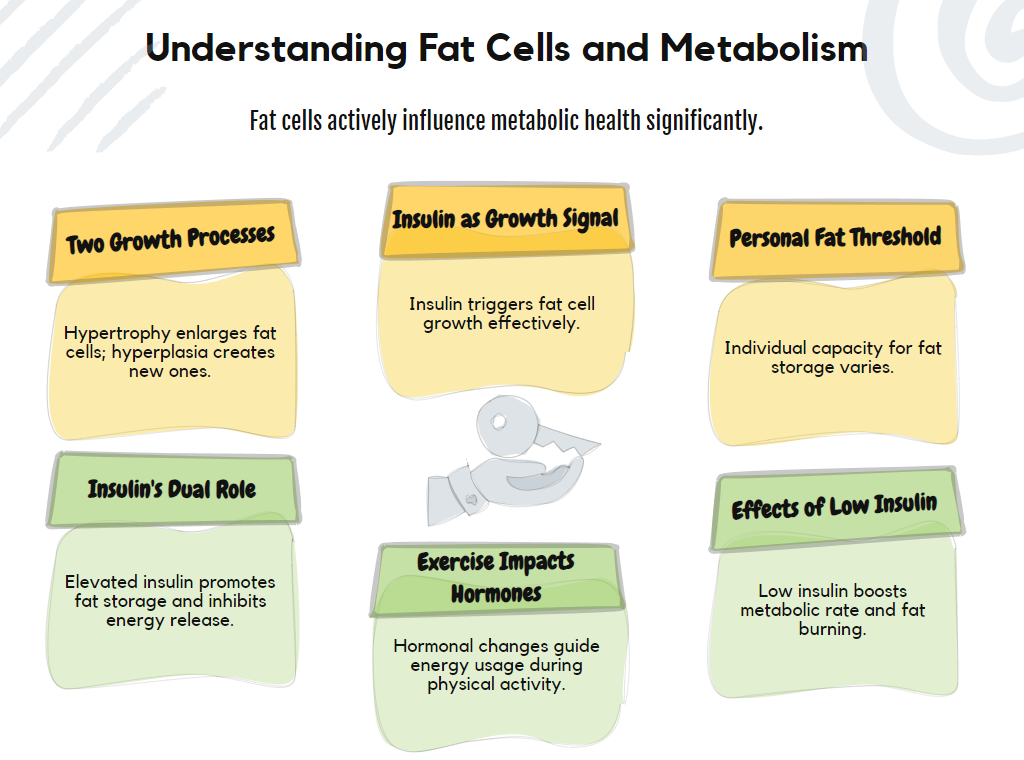
Adults typically keep a fairly steady variety of fat cells, however adjustments in body weight can still make the contour appearance fuller due to the fact that staying fat cells enlarge. Some sources also note that brand-new fat cells can develop under specific problems, specifically with sustained excess caloric consumption in time. We analyzed whether HCH and CCH adipocytes displayed transcriptional distinctions. Neither the previous transcriptional condition nor the transcriptional memory at the HC time point discussed the transcriptional deregulation observed in adipocytes from HCH computer mice (Fig. 5j). Further evaluation disclosed that numerous DEGs in the HCH group were modified during excessive weight however recuperated after WL in HC computer mice.
Use one-quarter of the plate for whole grains (such as brown rice or quinoa) and the other quarter for healthy and balanced proteins like fish, poultry, or beans. The procedure of reducing weight might be the same for everybody physiologically. It might take even more time to relocate the number on your range than you anticipate. To completely drop weight, Dr. Rifai states you have to up your exercise levels, as well.
Where Does Fat Go Away To When You Slim Down?
A DEG was taken into consideration brought back if it was no more deregulated in WL cells when compared to controls. If not recovered, we considered a DEG part of a transcriptional memory. Clusters identified as similar cell kinds (as an example, three collections of endothelial cells) were combined for DEG quantification however not differential expression evaluation itself. For human snRNA-seq, just cell types for which we obtained at least 30 cells per donor were thought about for the retention analysis.The Discouraging Reality Of Fat Regain
Value in between T0 and T1 for e-f was computed utilizing combined several Wilcoxon tests with Benjamini, Krieger and Yekutieli article hoc examination for several contrasts. A, b, Collection pens made use of for annotating cell collections in human omAT of the MTSS (left) and LTSS (right) research study. C, d, UMAP visualization representing omAT swimming pools from the MTSS study (c) and LTSS study (d) coloured by predicted cell subtypes from the Emont et al. natural AT dataset from White individuals. Feature stories revealing referral mapping scores illustrating just how well omAT dataset maps to the Emont et al. dataset.Evaluating adipogenesis ability, we discovered that the SVF from epiAT of HC and HHC computer mice built up lipids in reaction to insulin yet fell short to separate, unlike controls (Extended Information Fig. 10b). Adipogenesis was a little impaired in the SVF from ingAT of WL mice compared to controls (Extended Data Fig. 10c). These findings suggest that consistent cellular memory confers phenotypic effect ex vivo.